Pull up Riss Lake on two different sites this week and you'll walk away with two different stories. One shows median sale prices climbing sharply over the past year. Another shows the price per square foot falling by roughly the same margin, in the same neighborhood, in the same stretch of 2026. Neither site is lying. They're just measuring different things, and the reason they can both be technically correct says more about how to actually evaluate Riss Lake than either number does on its own.
If you're comparing Riss Lake to other Parkville neighborhoods and trying to decide whether it's appreciating or cooling off, the honest answer is that the question itself is slightly broken. Riss Lake isn't one housing market wearing one HOA sign. It's at least three, stacked on top of each other, and the headline median you see depends entirely on which one happened to sell that month.
What Each Number Is Actually Measuring
The gap starts with a basic mismatch. One portal's figure reflects median sale prices from homes that closed, pulled from actual MLS transactions. Another reflects median list prices for whatever happens to be sitting on the market right now, whether it sells at that number or not. In July 2026, homes listed for sale in Riss Lake carried a median asking price around $725,000, with price per square foot down close to 17 percent from the year before. That's a snapshot of what sellers are asking. It says nothing about what buyers are actually paying, and buyers and sellers can disagree for months in a neighborhood this size.
Meanwhile, closed sales data from earlier in the year told a nearly opposite story: a median sale price near $800,000, up over 16 percent from twelve months prior. That's not a typo and it's not a market reversing itself twice in six months. It's two different data sets describing two different pools of homes.
Why the Sample Size Breaks the Math
Here's the piece that explains the whiplash. In January 2026, three homes sold in Riss Lake. The year before, in the same month, six homes sold. That's not a large enough sample for a median to mean much of anything. When you're averaging three transactions, one $2 million lakefront estate closing next to two $650,000 resales will swing your "median" by six figures, and it'll look like the neighborhood jumped in value when really it's just that a different mix of homes happened to trade hands.
Days on market tells the same story from a different angle. Some portals report homes moving in the low 20s. Others put the average closer to 75 days as of early 2026. Both can be accurate at once, because with so few sales in a given month, a single slow-moving custom build can drag the average up while a handful of quick turnovers in a different section pull it right back down. None of these numbers are wrong. They're just too thin to carry the weight buyers put on them.
One HOA, Three Different Housing Markets
The deeper reason the median jumps around is that "Riss Lake" isn't a single product. It's a name attached to a lake, a homeowners association, and at least three genuinely different ways of buying into it.
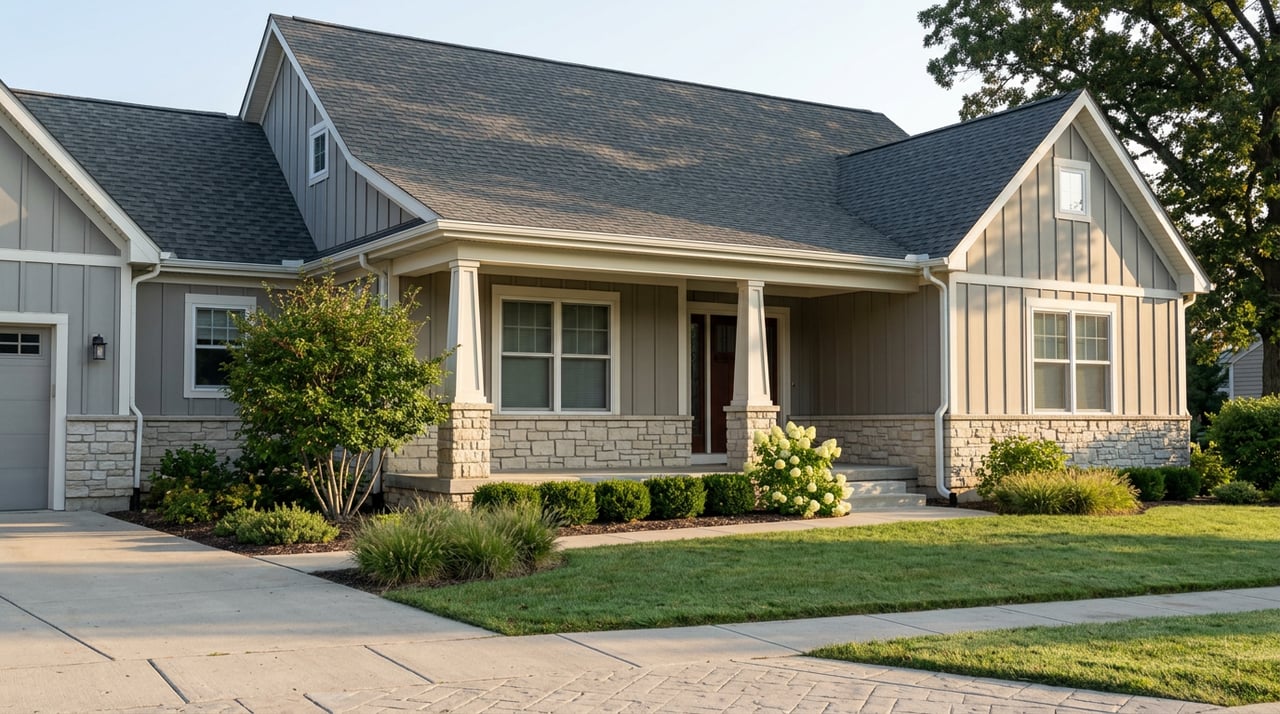
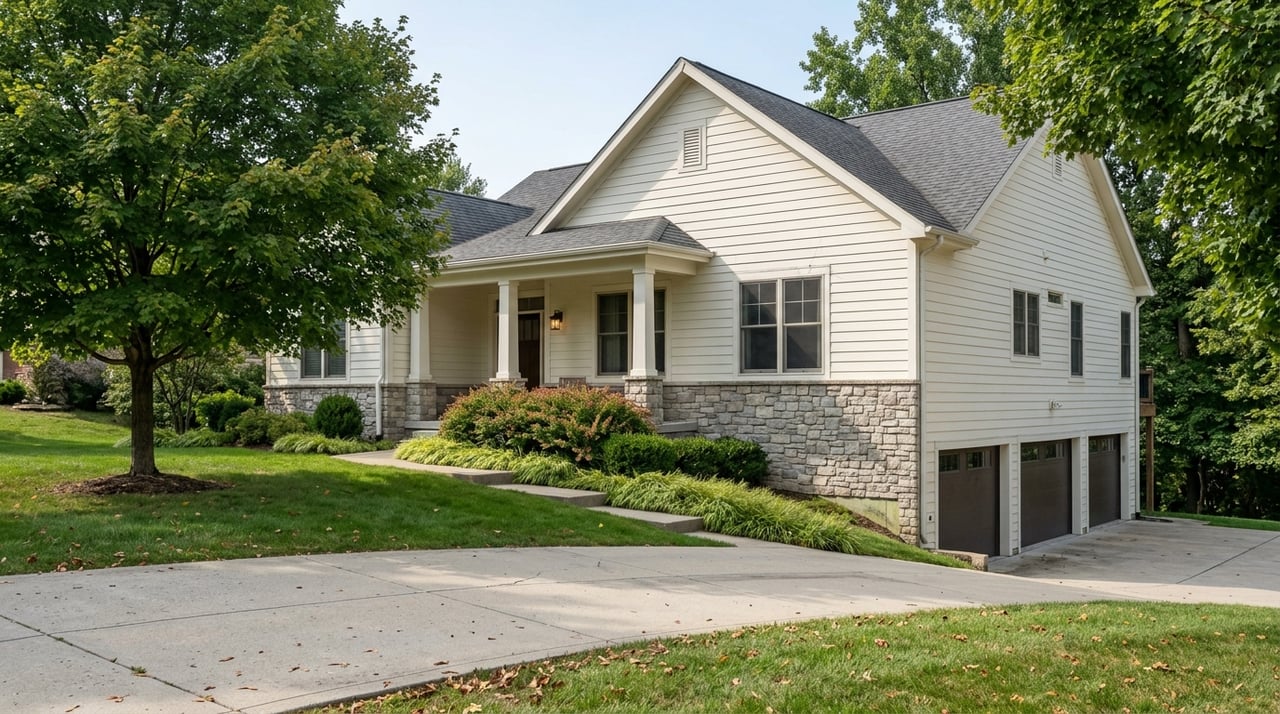
The original custom-built sections and West Shore Estates represent the legacy core, gated lakefront and near-lakefront lots built out over decades, where prices range from the $600,000s for older, off-water homes up to well over $2 million for waterfront estates with private frontage.
The Reserve is a newer, maintenance-provided section on the west side of the community. Buyers there build with an approved builder or bring their own, and the association handles the yard.
The Sanctuary is newer still, a 19-lot enclave built entirely by Don Julian Builders, adjacent to the Parkville Nature Sanctuary, with homes expected to start around $1.3 million including the lot.
Three products, one HOA, one lake. That 134-acre lake, by the way, exists because Riss Lake's developers donated 49 acres at the base of the dam to the City of Parkville back in 1989 to seed what became the Parkville Nature Sanctuary, so the community's footprint and the city's trail system have been tied together for close to four decades.
| Section | Typical product | Builder | Reported starting range |
|---|---|---|---|
| Legacy / West Shore Estates | Custom lakefront and near-lakefront homes, gated | Buyer's choice, developer approval | Roughly $600K to $2M+ |
| The Reserve | Maintenance-provided lots, walkout sites | Homes by Chris or approved builder | Varies by lot, resale-driven |
| The Sanctuary | New construction, estate-sized lots | Don Julian Builders | From roughly $1.3M including lot |
When a Sanctuary new build closes in the same month as two Reserve resales, the "median" that comes out the other end doesn't describe any real trend. It describes which product happened to trade.
What the Dues Actually Add Up To
This is where the differences stop being academic and start affecting your monthly payment. Riss Lake's base association due for 2026 runs $1,460 a year, which works out to about $122 a month, and it's listed by the association itself as covering common areas and the lake system. The Reserve adds a separate maintenance fee on top of that, currently $260 a month, covering mowing, weeding, mulching, chemical applications, irrigation start-up and shutdown, and snow removal. Add it up and a Reserve homeowner is paying roughly $382 a month in HOA-related costs before a single mortgage payment.
The Sanctuary's posted HOA fee is $122 a month, covering ground maintenance and snow removal for that enclave. What isn't clear from public listing data is whether that $122 sits on top of the same $1,460 annual master due that Reserve and legacy owners pay, or whether it stands in for it. That distinction is exactly the kind of detail that lives in the HOA resale certificate and nowhere else, and it can move your real monthly number by hundreds of dollars depending on the answer. It's worth asking for that document before you write an offer, not after.
The practical result: a lower list price in the Reserve doesn't automatically mean a lower monthly cost of ownership. A buyer comparing a $650,000 Reserve resale to a $1.3 million Sanctuary new build needs to run the dues math on both, not just the sale price.
So Is Riss Lake Appreciating or Not
The honest answer is that the neighborhood-wide median isn't a reliable tool for answering that question, at least not with this few sales closing each month. A better approach is to ask which section a specific listing sits in, what its dues actually cover, and how that section's recent closings compare to each other, not to the whole neighborhood blended together. If you're weighing Riss Lake against Parkville's downtown core or against The National, that section-by-section comparison will tell you more than any single headline number pulled from a portal's algorithm.
We've written before about what HOA living in Riss Lake actually means day to day, and about where new construction is still available across Parkville's Northland. This piece is meant to sit alongside those: the lifestyle and the lot availability matter, but so does knowing why the price you see quoted might not be the price that applies to the specific home you're looking at.
A Few Questions Worth Asking Directly
Why do days-on-market figures for Riss Lake vary so much between sites? The same thin-sample problem applies. A handful of closings each month means one slow sale or one quick one can shift the average by weeks.
Does a lower list price in The Reserve mean lower total housing costs? Not necessarily, once you add the $260 monthly maintenance fee to the $1,460 annual base due. Run the full monthly number before comparing it to a Sanctuary or legacy listing.
Should I ask for HOA documents before making an offer in Riss Lake? Yes, and specifically ask whether the section you're considering carries fees on top of the master association due or in place of it. That answer isn't always visible in the listing itself.
If you're trying to figure out which section of Riss Lake actually fits your budget and your plans, and not just which one shows up first in a portal search, Northstar Realty can walk through the specific dues, sections, and recent closings with you. Contact our Parkville team for a local market consultation before you start comparing numbers that were never measuring the same thing.